THE IRON SENSEI JOURNAL
Karate. Health. Fitness. Psychology. Philosophy. Reflections from a Life in the Martial Arts.
What Is Osu?
By Jonathan Lowell ("The Iron Sensei")
We hear it all the time in the dojo.
Many people assume Osu is simply a Japanese way of saying "hello" or "yes." It isn't. It carries a much deeper meaning.
Interestingly, Osu is used far more in mainland Japan than in Okinawa. Okinawans tend to be very protective of their own traditions, and many Okinawan karate schools rarely use the word. They often prefer Hai, Sensei ("Yes, Sensei") instead.
So where did Osu come from?
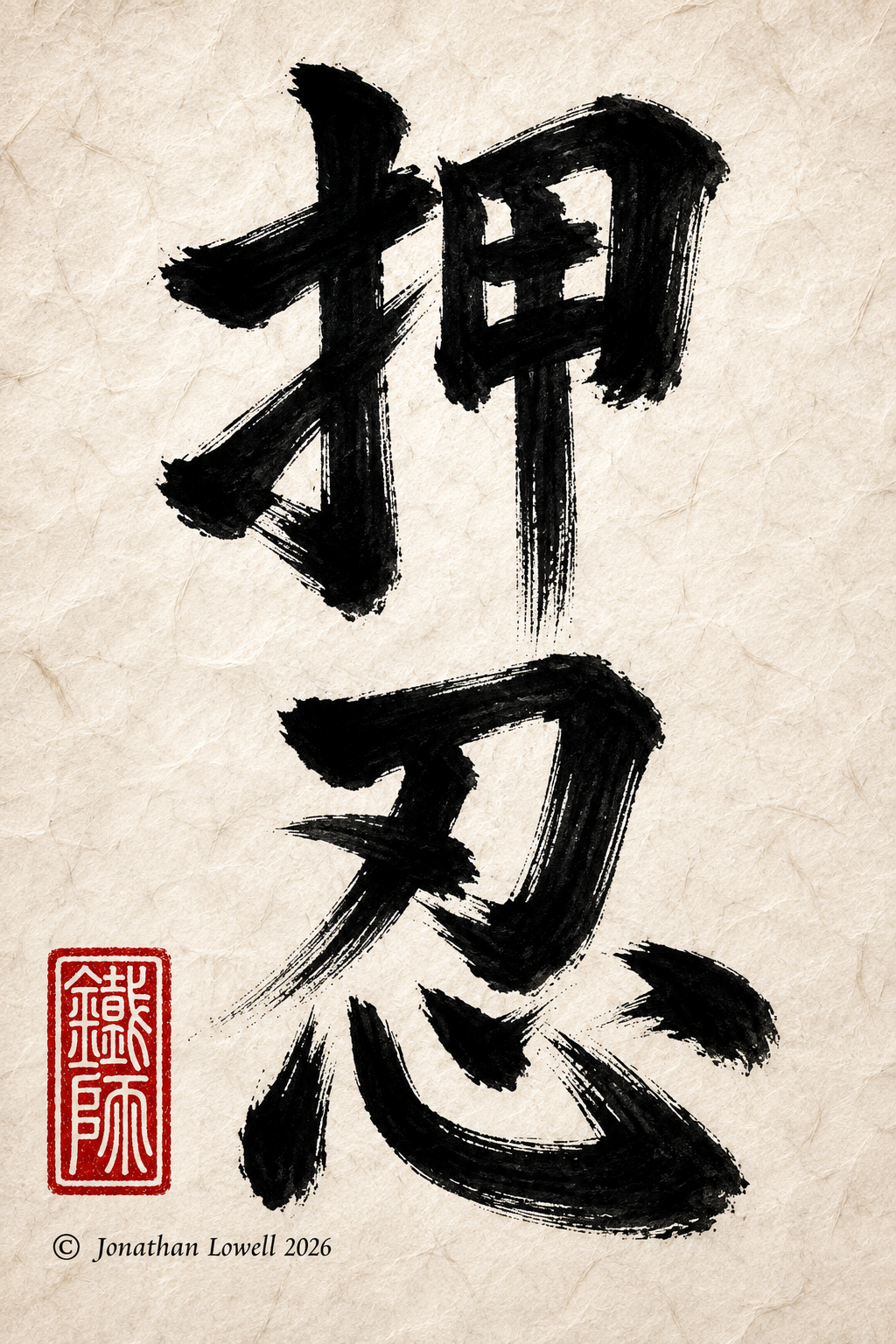
It is generally believed to be a shortened form of the phrase Oshi Shinobu, meaning "to push and endure." Over time, the phrase was shortened into the single word Osu, pronounced "Oss."
My understanding is that it became popular in Japanese universities during the 1930s, particularly in Judo clubs. Students trained hard, encouraged one another, and answered their instructors with a strong, confident "Osu!"
Eventually, it became much more than encouragement. It became an acknowledgment.
The instructor would say, "Train harder."
The class would answer, "Osu!"
"Do you understand?"
"Osu!"
You might even meet another student on the street and greet him with "Osu!"
When karate spread through the Japanese universities, many customs from Judo came with it. The gi, the colored belt ranking system, formal bowing, meditation, and the use of Osu all became common in many Japanese martial arts, including Karate, Kendo, and others.
Although I practice Okinawan Goju-Ryu Karate-Do, I still use Osu in my dojo.
I appreciate many aspects of Japanese budo—the structure, discipline, and respect. My own teaching has always reflected both the Okinawan and Japanese traditions.
People often think Goju-Ryu in Japan is completely different from Goju-Ryu in Okinawa. In my opinion, the differences are usually matters of emphasis rather than entirely different systems. One dojo may focus more on kumite, another on kata, and another on competition. Even within Okinawa, two instructors may teach the same kata a little differently based on their own understanding and experience.
So should you say Osu?
Yes... but don't overdo it.
In Okinawa, you will often hear Hai, Sensei instead. In some Japanese dojos, you'll hear Osu after almost everything the instructor says.
Personally, I think both can be overused.
I once had a very sincere student who answered almost every sentence with "Hai!" or "Osu!" It came from respect, but after a while it became almost automatic.
For me, Osu has the greatest meaning when it is used at the right moment.
One word.
One spirit.
Push on. Endure. Continue.
Osu.
Jonathan Lowell ("The Iron Sensei") has practiced Goju-Ryu Karate-Do for more than fifty years. A lifelong student of Okinawan karate, the Bubishi, martial history, and traditional training methods, he writes The Iron Sensei Journal to explore the history, philosophy, health, and enduring lessons of the martial arts.
© Jonathan Lowell 2026